Wednesday, 25 January 2012
Monday, 19 December 2011
Essay Proposal
Title
An investigation into the consistent designs of Coca Cola and how it contributes to the brand's success.
Brief Description
Coca Cola was established in 1886, and since then has stuck with the same logo and colour scheme. These have been used in the company's designs ever since, and has been transformed into one of the globes most recognised brands. The power of the branding allowed the company rights to Santa Claus, which is an extremely powerful commercial device.
I will use Pepsi as an example of a similar company that changes their designs regularly yet don't receive as much success as Coca Cola.
6 Sources
Van der Bergh, J. and Behrer, M., (2011) How Cool Brands Stay Hot, London, Kogan Page Limited.
Verma, H. V., (2010) Branding Demystified, New Delhi, Response Books.
Olins, W., (2004) On Brand, New York, Thames & Hudson.
Quantam Books, (1999) Coca Cola Memorabilia, Kent, Grange Books.
http://www.aber.ac.uk/media/index.html
(the handout from audience & context)
Thursday, 1 December 2011
Thursday, 24 November 2011
Sunday, 20 November 2011
Task 2: Benjamin & Mechanical Reproduction
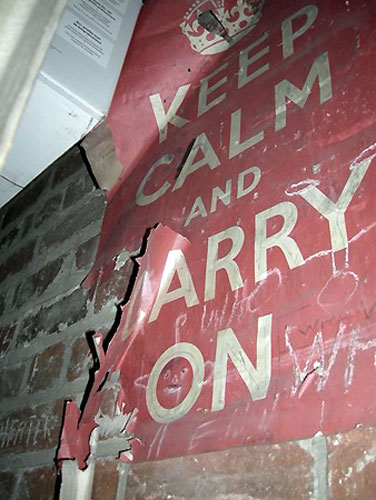
The 'Keep Calm and Carry On' poster was originally designed as a propaganda poster for the second world war. It should be a rare item in the modern era, existing only through genuine posters from the original era.
Instead, it has been transformed into a replication of the original design, through altered messages in the same style, and reproductions of the poster on mugs and other everyday objects. It has become extremely kitsch, a selling device that is steadily losing its original perception and role that it once held.
"Technical reproduction can put the copy of the original into situations which would be out of reach for the original itself." Benjamin, Walter (1936)This quote links directly with these posters, as nothing can be done to preserve the original perceptions and meanings of the original piece. Much like how photography revolutionised art in the 19th Century, new technologies of the 21st Century have helped to reproduce this once serious, meaningful message into a kitsch mainstream trend.
Thursday, 10 November 2011
Sunday, 6 November 2011
Task 1: Panopticism
Choose an example of one aspect of contemporary culture that is, in your opinion, panoptic. Write an explanation of this, in approximately 200-300 words, employing key Foucauldian language, such as 'Docile Bodies' or 'self-regulation, and using not less than 5 quotes from the text 'Panopticism' in Thomas, J. (2000) 'Reading Images', NY, Palgrave McMillan.
---
One brand new concept that has been integrated into people's lives in the past 10 years is social networking. Sites such as Facebook, Twitter and in the past MySpace, give the individual a stage in which to act on and an audience to perform to. Users have the ability to create perfect, idealistic versions of themselves to reflect what their viewers want to see.
When referring to the Panopticon, created by Jeremy Bantham, Foucault explains the concept as "so many small theatres, in which each actor is alone, perfectly individualised and constantly visible." This describes modern social networking perfectly: each individual is alone, a small part of the big structure.
"He is seen, but he does not see" reflects upon the user being watched, but never knowing if they're being observed at any one time. This forces them to act in a certain way, to filter their profiles to be acceptable, in the event of being seen.
"The prisoner should be constantly observed by an inspector, for what matters is that he knows himself to be observed." Knowing that all can see makes the user behave in the way that is expected of them.
"No more bars, no more chains, no more heavy locks." The user is free to do whatever he or she wants, there are no limitations, but the majority choose to act in a regulated fashion.
"A system of permanent registration." Each post is registered, and permanently monitored.
Subscribe to:
Posts (Atom)